FOSHAN, GUANGDONG, CHINA, October 26, 2026 /EINPresswire.com/ — Auditing commercial salon furniture quality prior to bulk order sign-off requires evaluating structural stability, upholstery craftsmanship, and electrical actuator performance. Inspectors must also verify dimensional tolerances and protective export packaging against an approved technical specification sheet. Relying on superficial sample inspections or generic vendor guarantees often leads to field failures and costly warranty disputes. Operating a 30,000-square-meter facility with 15 years of experience, TURRI enforces manufacturing excellence through a six-stage quality sequence governing raw materials, precision fabrication, motor testing, and export crating.
Set the Inspection Baseline Before Bulk Approval
A bulk quality acceptance baseline is defined as a contractually binding technical document combining dimensioned drawings, approved physical golden samples, material test reports, and quantitative tolerance thresholds. Executing an effective pre-shipment quality audit requires evaluating finished production units directly against this approved baseline. Standardizing model codes, upholstery swatches, foam densities, actuator part numbers, and packaging blueprints ensures objective quality verification prior to container dispatch.
Establishing a specification-first methodology prevents subjective judgments from compromising commercial acceptance. When procurement teams and factory quality managers evaluate goods against an immutable technical baseline, discussions regarding material suitability, structural tolerances, and cosmetic finishes remain grounded in contractually agreed parameters. Sourcing teams should structure their pre-bulk quality evaluation across five distinct domains: structural frame integrity, upholstery craftsmanship, electrical mechanism functionality, customized branding accuracy, and export packaging durability.
Inspect Upholstery, Frame, Hardware, and Finish
Physical furniture construction must be inspected as an interconnected engineering system. Upholstery vinyl and interior foam create the tactile contact surface, while internal wood and steel frames supply structural rigidity. Heavy-duty hardware maintains mechanical alignment across moving joints, and surface electroplating or powder-coating safeguards against corrosion and daily wear.
TURRI’s manufacturing standards establish verifiable physical benchmarks across commercial-grade upholstery, heavy-gauge steel chassis, high-resilience comfort foam, and protective surface finishes. Sourcing teams evaluate pre-production golden samples and bulk lots against four objective physical checkpoints:
Raw Material Qualification: Audit 40 to 45 kg/m³ foam density, 50,000-rub upholstery wear ratings, and 1.5-millimeter cold-rolled steel tube gauges.
Structural Frame Fabrication: Verify full-penetration robotic welds, joint gusset reinforcement, and anti-corrosion primer coverage across the entire chassis.
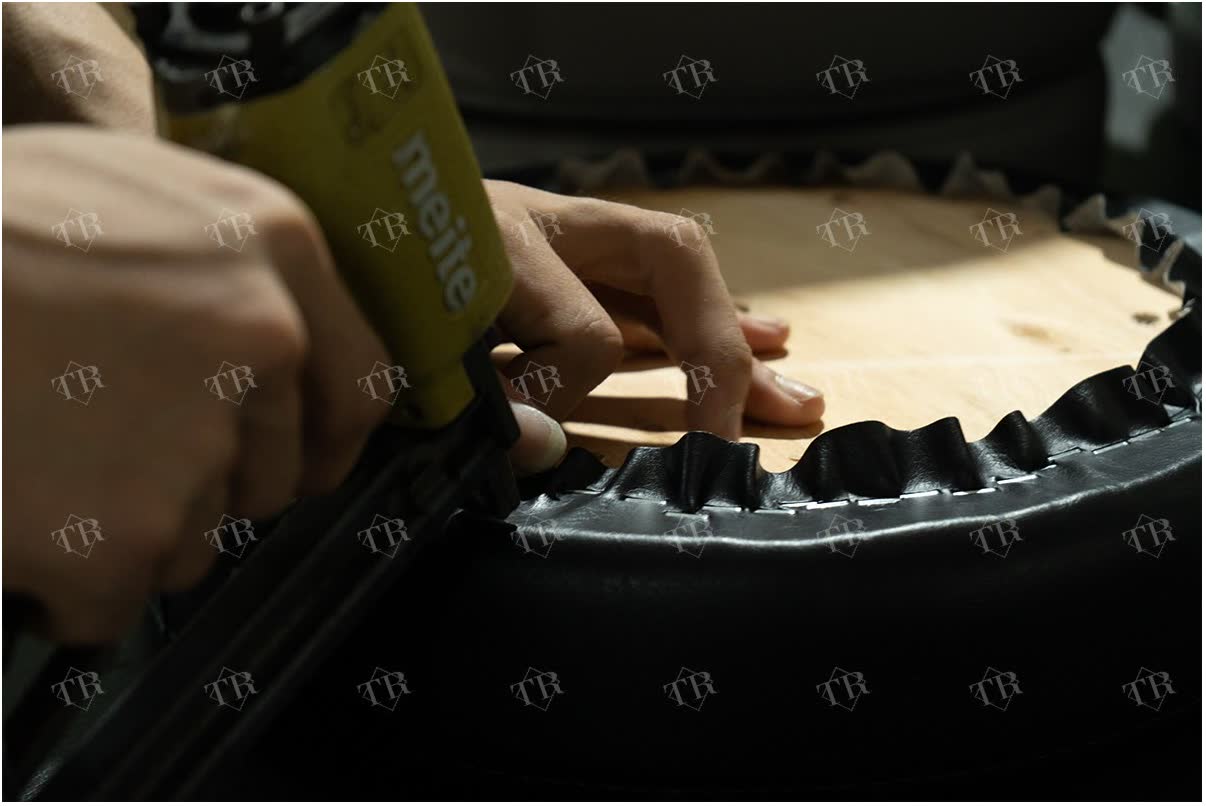
Upholstery & Cushion Tailoring: Inspect uniform double-stitched seam tension, precise pattern alignment, and wrinkle-free contour wrapping over high-resilience foam.
Motorized Actuator Testing: Execute continuous dynamic elevation under 200kg load, verifying silent operation under 45 dB and instantaneous control response.
Executing this physical audit delivers an objective quality acceptance decision, eliminating reliance on vague marketing assertions such as premium grade or commercial luxury.
Test Electric Adjustment, Controls, Stability, and Movement
Motorized and electric salon furniture demands rigorous dynamic functional testing alongside static structural inspection. Actuator travel speed, elevation smoothness, mechanical stability across maximum extension angles, and synchronization between articulating sections must operate flawlessly.
TURRI’s factory production protocol subjects all motorized furniture to systematic function testing prior to packaging. Technicians inspect multi-axis electric adjustment, chassis stability under simulated working loads, control switch responsiveness, and continuous quiet actuator travel. These testing protocols establish a clear functional checklist for electric beauty beds, medical-aesthetic chairs, and treatment tables.
For models equipped with redundant control systems—such as dual-sided foot switches combined with an ergonomic hand pendant—inspectors must verify that every control input executes the intended movement smoothly. Controls must operate without hesitation or electrical interference. Functional responsiveness and mechanical stability must be evaluated simultaneously; smooth elevation provides little commercial value if the treatment bed exhibits frame wobble or vibration at full height.
Check Dimensions, Custom Details, Final Inspection, and Export Packaging
Final quality inspection integrates all engineering and commercial requirements immediately prior to container loading. TURRI conducts comprehensive pre-shipment inspections evaluating overall cosmetic appearance, structural stability, functional operation, and protective export packaging following earlier production and function-testing stages.
Customized aesthetic and functional details demand rigorous verification. Custom upholstery dyes, specialized leather textures, bespoke dimensions, embroidered brand logos, precision-etched metal nameplates, and localized compliance labels must match the approved pre-production sample. A production run may be mechanically sound yet commercially unacceptable if branding execution or custom dimensions deviate from signed-off contracts.
Protective export packaging represents the final critical defense in the quality assurance chain. Because international ocean freight exposes goods to extreme vibration, container humping, and maritime humidity, packaging engineering must be inspected thoroughly. Packaging deliverables include multi-layer five-ply corrugated master cartons, internal molded foam corner blocks, protective edge guards, moisture-barrier wrapping, heavy-duty strapping, and clear international shipping marks with warehouse barcodes.
TURRI unites full-category salon furniture manufacturing with integrated production quality control, customized branding, protective export packaging, global logistics support, and after-sales service. This integrated approach ensures that approved quality standards are maintained from factory assembly through overseas delivery.
Salon Furniture Quality FAQs
These practical answers guide commercial procurement managers and quality auditors in evaluating physical construction, electrical mechanisms, branding accuracy, and export packaging before signing off on volume shipments.
Which Documents Should Define the Inspection Baseline?
The inspection baseline must be defined by the approved purchase contract, dimensioned CAD drawings, material specification sheets, signed pre-production golden samples, electrical compliance documentation, and packaging specifications.
Which Physical Areas Deserve the Closest Inspection?
Inspectors should prioritize high-stress frame welds, structural fasteners, moving pivot joints, upholstery seam stitching, high-density foam rebound, and protective surface finishes, as these areas govern structural longevity.
How Should Electric Salon Furniture Be Tested?
Inspectors should cycle all motorized actuators through their full range of motion under load. They must verify smooth travel, silent operation, immediate control switch response, and structural chassis stability across all articulation angles.
Why Should Custom Details Be Part of Quality Inspection?
Custom upholstery colors, dimensional modifications, embroidered logos, and metal nameplates define the commercial value of proprietary collections and must match approved contract specifications.
Why Does Packaging Belong in the Quality Review?
Inadequate packaging can compromise perfectly manufactured salon furniture during international ocean transit, making five-ply cartons, internal foam blocks, and reinforced palletization essential quality deliverables.
Turn the Quality Checklist into a Bulk-Order Decision with TURRI
Auditing commercial salon furniture against an objective technical baseline ensures that volume shipments deliver unvarying dimensional accuracy, structural longevity, and flawless cosmetic finishes. To review factory inspection protocols, request pre-production golden samples, or establish an inspection brief for your upcoming volume order, submit your model selections and technical specifications. Visit https://turrisalon.com/ to initiate an engineering quality review.
TURRI
TURRI
Legal Disclaimer:
EIN Presswire provides this news content “as is” without warranty of any kind. We do not accept any responsibility or liability
for the accuracy, content, images, videos, licenses, completeness, legality, or reliability of the information contained in this
article. If you have any complaints or copyright issues related to this article, kindly contact the author above.

Media gallery