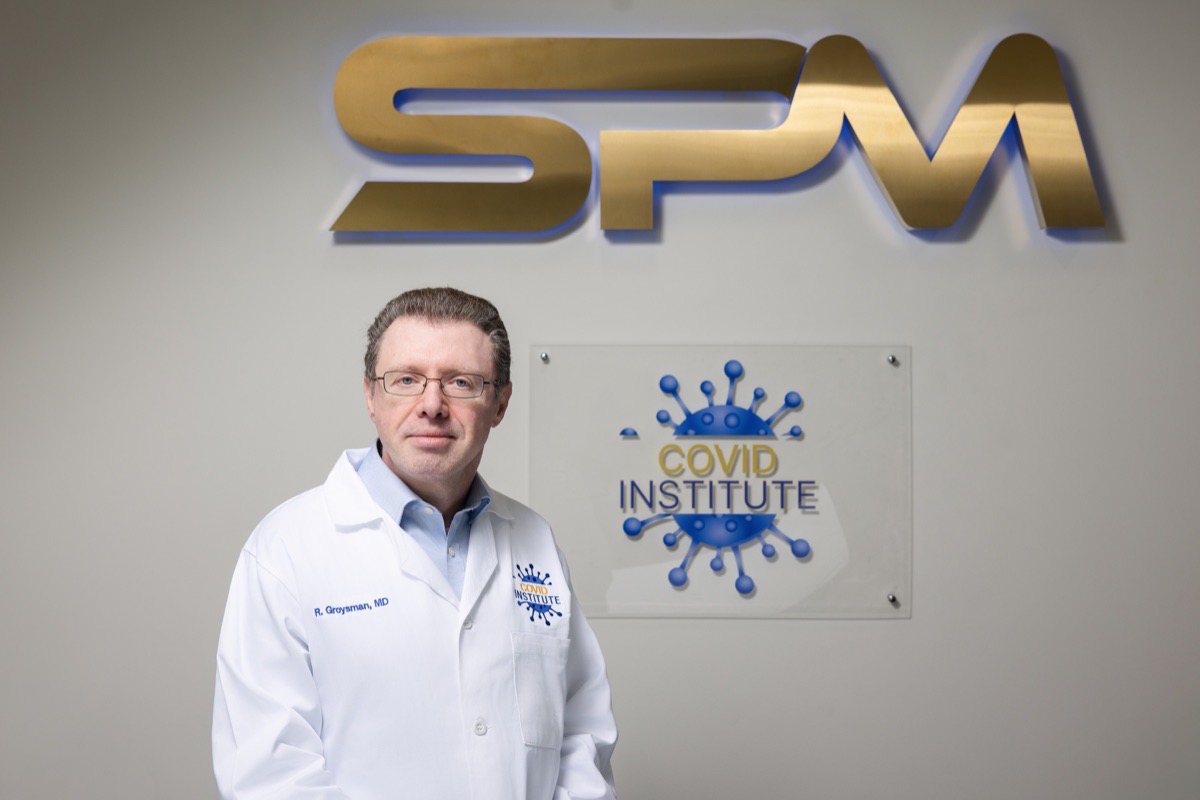
The author argues that overlooking this biology may be why many Long COVID treatments have shown only mixed or modest results.
PLANO, TX, UNITED STATES, June 16, 2026 /EINPresswire.com/ — A new peer-reviewed paper argues Long COVID research should sort patients by their underlying biology, not by their symptoms alone, and lays out six measurable mechanisms for doing so. Written by Robert Groysman, MD, founder of The COVID Institute, the paper appeared in late May 2026 as a Hypothesis and Theory article in the journal Frontiers in Medicine.
The framework argues grouping patients by symptoms alone, the standard approach in most research, mixes people whose problems come from different biological sources. That blending, Groysman writes, can dilute the signal in clinical trials and help explain why many Long COVID treatments have shown mixed or modest results.
In place of symptom clusters, the paper anchors Long COVID in six recurring and testable domains including autonomic dysfunction, mitochondrial dysfunction, endothelial and microvascular dysfunction, gut dysbiosis and barrier disruption, mast cell signaling, and neuroendocrine dysregulation. Each can be assessed with established physiological testing or lab markers.
The paper frames these domains as interacting nodes in a single network. Trouble in one system can ripple into others and form self-reinforcing loops, which the model offers as a reason symptoms persist long after the infection itself has cleared.
The framework mirrors the mechanism-based method Groysman has used in his Plano clinic for more than five years, though the study reports no funding and declares no commercial conflict of interest. It also includes a prototype screening tool, which the author describes as unvalidated and intended for research only, and calls for trials that enroll patients by biology rather than symptoms.
“Two patients can walk in with the same fatigue and need completely different treatment, because the cause is different in each of them,” said Robert Groysman, MD, founder of The COVID Institute. “When research lumps everyone together by symptoms, those differences get lost, and so does the evidence that a treatment actually works.”
The paper is positioned as a hypothesis to be tested, not a finished answer. It states plainly that the model is falsifiable and that prospective studies will be needed to confirm whether biologically defined groups respond differently to treatment.
“I have spent years watching these patterns in the clinic. This paper is my attempt to give that clinical reality a structure other researchers can test,” Groysman said. “I am not claiming the final answer. I am offering a map, and a map is only useful if people can check it against the ground.”
The full paper, “Long COVID as a network disorder,” is open access in Frontiers in Medicine at https://www.frontiersin.org/journals/medicine/articles/10.3389/fmed.2026.1841690/full (DOI: 10.3389/fmed.2026.1841690).
About The COVID Institute
The COVID Institute is a Plano, Texas clinic focused on the diagnosis and treatment of Long COVID. Founded by Robert Groysman, MD, a board-certified anesthesiologist and pain medicine specialist, the clinic evaluates patients across six interconnected biological mechanisms rather than symptoms alone. Groysman is the author of The Complete Long COVID Handbook, a seven-volume series for patients and clinicians. Learn more at covidinstitute.org.
Dawn Benford
Covidinstitute.org
+1 214-390-7557
email us here
Visit us on social media:
LinkedIn
Instagram
Facebook
YouTube
X
Legal Disclaimer:
EIN Presswire provides this news content “as is” without warranty of any kind. We do not accept any responsibility or liability
for the accuracy, content, images, videos, licenses, completeness, legality, or reliability of the information contained in this
article. If you have any complaints or copyright issues related to this article, kindly contact the author above.

Media gallery