

Key Takeaways
- Most apartment treadmill noise travels as vibration through the frame, feet, and floor joists rather than as airborne sound, so stopping it at the contact point matters most
- Leveling every foot of the treadmill and keeping the frame clear of shared walls are two free fixes that can cut down on thuds and buzzing
- Persistent noise can point to belt alignment, roller wear, or loose hardware rather than the floor, which calls for a different set of checks
- SOLE Fitness explains that a dense, firm mat under the treadmill can reduce floor-transmitted vibration – find out how the latest models work below
Apartment living and treadmill workouts can coexist peacefully, but only when noise gets handled at its real source. Footfalls, motor hum, and belt movement all create vibration, and vibration is what actually travels down through floors and into the ceiling below. Understanding where that vibration starts, and how to interrupt its path, makes the difference between a quiet workout and a knock on the door from a downstairs neighbor.
The steps below walk through a practical, room-by-room approach to cutting noise before it becomes a problem.
Why Footfalls Travel To Neighbors
Every step on a treadmill belt sends a small shock through the deck, into the frame, and down through the feet. On a solid concrete slab, that energy mostly stays put. On a suspended floor, which is common in most apartment buildings, the story changes. Joists and floorboards act almost like a drum skin, picking up that low thud and carrying it across a surprisingly wide area, including straight into the ceiling of the unit below.
This is why a treadmill can feel quiet to the person running on it while sounding like a dropped weight one floor down. The sound moves as structure-borne vibration finding a path through wood, drywall, and framing rather than through the air. Fixing that path starts with the treadmill’s point of contact with the floor, not with soundproofing the walls.
Stop Vibration At The Source
The single most effective change an apartment dweller can make is placing something dense and stable between the treadmill and the floor. This does not erase every bit of sound, but it interrupts the vibration before it has a chance to spread through the building’s frame.
Choose A Dense, Firm Mat Over Foam
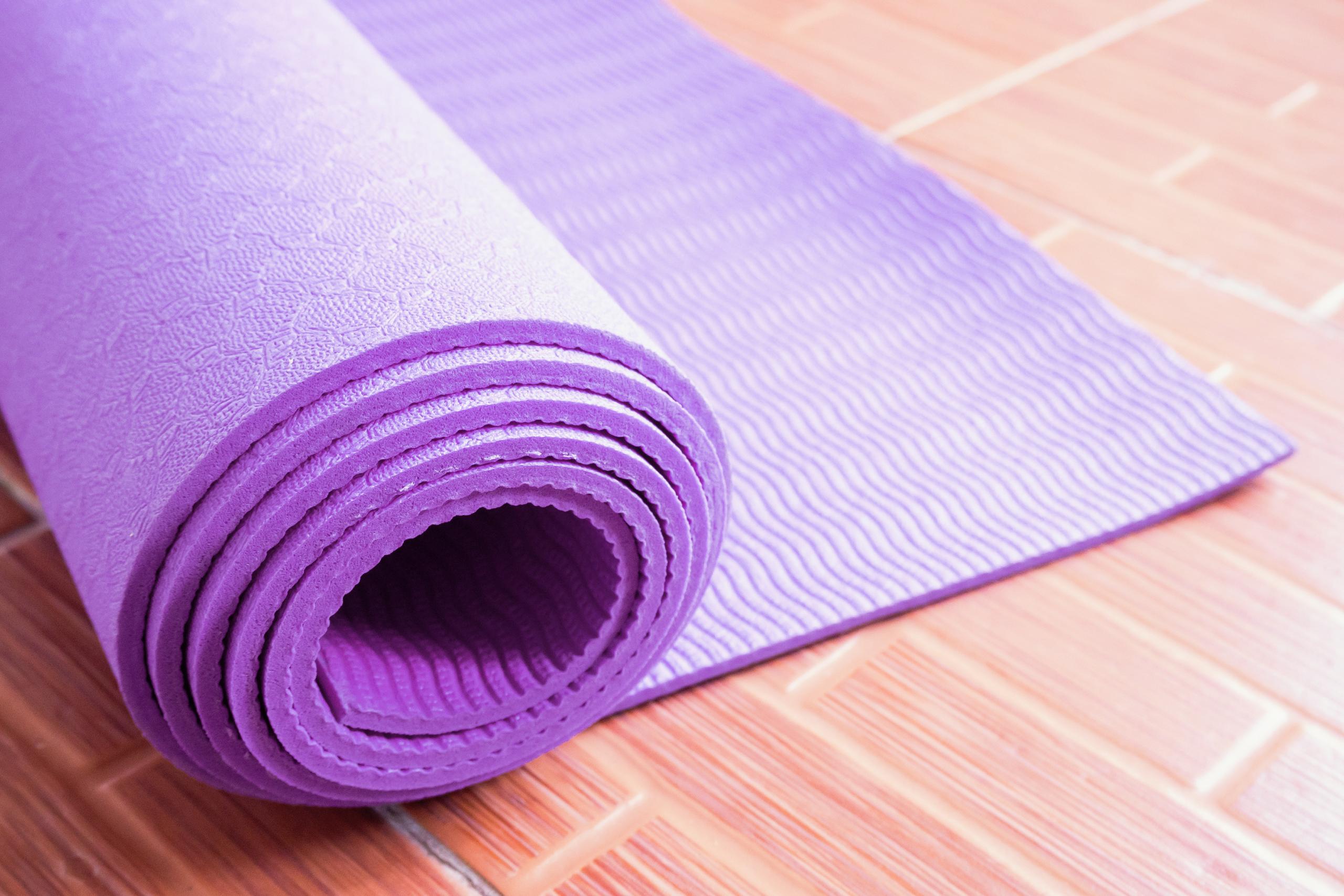
Soft, springy foam tiles might seem like a comfortable choice, but they tend to compress unevenly under a moving treadmill, which can actually make the machine feel less stable. A dense, firm mat holds its shape under load and keeps the treadmill’s feet supported evenly across the entire base. Firmness, not softness, is what absorbs vibration without letting the frame rock or sink unevenly during a workout.
A well-built mat also protects the floor itself. Some are made from 1/4-inch PVC vinyl and nitrile rubber, sized to sit under a full-length treadmill. They’re usually built to protect tile, hardwood, stone, cement, or carpet, and can help keep carpet fibers from working their way up into the machine, supporting the long-term health of the belt and internal components.
Layer A Rubber Base With Foot Pads On Upper Floors
Upper-floor apartments often need an extra layer of defense. A common approach is stacking a dense rubber base beneath the treadmill mat, then adding anti-vibration pads under each individual foot. This layered setup gives the vibration more material to pass through before it reaches the subfloor, which can meaningfully cut down on the thud that travels to the unit below.
This extra step is not strictly necessary for every apartment, but it is worth considering for anyone on a third floor or higher, or in a building with older or lighter floor construction. Treating it as an optional upgrade rather than a requirement keeps the setup proportional to the actual noise risk.
Level And Support Every Foot
A treadmill that rocks even slightly will amplify noise with every step, since each footfall forces the frame to shift and resettle. Checking that all four feet make solid, even contact with the floor is a quick task that pays off immediately. Most treadmills include adjustable leveling feet for exactly this reason, and a few turns can eliminate a wobble that would otherwise turn into a rhythmic knock during a workout.
Full support matters just as much as level support. Every foot should rest flat on the mat with no gaps, no curled edges underneath, and no partial overhang off the mat’s surface. A treadmill that sits level but only partially supported can still rock under load, so both conditions need to be met together.
Placement That Keeps Walls Quiet
Where a treadmill sits in a room affects how much vibration reaches neighboring spaces. Positioning it closer to a load-bearing wall, rather than out in the middle of an open floor span, tends to transmit less vibration than placing it over a long, unsupported section of flooring. Floor joists flex more toward the center of a room, so that central area often acts like a bigger sound amplifier.
Contact with walls deserves attention too. A treadmill frame that touches a shared wall can send vibration directly into that partition, carrying noise into the adjoining unit. Leaving a few inches of clearance around the entire machine, and never letting the frame lean or rest against a wall, closes off that transmission path before it starts.
When Noise Points To The Machine, Not The Floor
Sometimes a mat, leveling, and smart placement still leave behind a noise that nags at every workout. When that happens, the issue is usually mechanical rather than vibration-related, and it calls for a look at the treadmill itself.
Check Belt Alignment, Tension, And Rollers
A belt that rubs against a side rail creates a steady friction sound, while a belt that has gone too slack can slap audibly against the deck with every stride. Both issues often trace back to alignment or tension that has drifted out of place over time. A squeak or grinding noise can also point to worn rollers or bearings, which is worth checking alongside belt tension whenever an unusual sound shows up.
Re-centering the belt and inspecting the rollers for wear are reasonable first steps for anyone hearing a new or worsening sound. These checks take only a few minutes and often resolve the issue without needing a service call.
Clean, Lubricate, And Tighten Hardware
Dust, debris, and dried-out lubrication can all contribute to friction noise over months of regular use. Before troubleshooting further, unplug the treadmill and wipe down the side rails, belt edges, and visible deck area. From there:
- Apply lubricant only if the treadmill’s manual calls for it, and use the specific type and process the manufacturer recommends.
- Inspect the deck bolts and frame hardware for anything that has worked loose, since a loose bolt can add a knock or buzz that mimics vibration noise.
- Re-tighten any hardware found loose, then test the treadmill at a low speed to confirm the sound is gone.
These maintenance steps address noise sources a mat was never designed to fix, since a mat works on vibration at the floor, not on friction or looseness inside the machine itself.
Walk, Not Run, During Quiet Hours
Timing and impact style both play a role in how much noise reaches neighbors. Where the treadmill’s manual allows for it, choosing to walk instead of run during certain hours reduces the force of each footfall, which in turn reduces the vibration passed into the floor. Saving faster running sessions for daytime hours, and sticking to walking or light jogging during a building’s quiet hours, is a simple scheduling habit that respects both a workout routine and the neighbors below.
This approach costs nothing and requires no equipment changes, making it one of the easiest habits to adopt alongside the physical fixes already covered.
A Mat Helps With Workout Noise
A mat remains one of the most useful tools for cutting down on floor-transmitted vibration, and it does double duty by protecting the floor surface underneath from scuffs and wear. A mat alone, however, will not fully solve noise concerns: motor hum, belt noise, and any mechanical issue inside the treadmill will still be audible to some degree, since a mat only addresses the vibration path between the machine and the floor.
Thinking of a mat as one part of a layered strategy, alongside leveling, smart placement, and regular maintenance, sets realistic expectations while still delivering a noticeably quieter workout space. For apartment dwellers ready to put these ideas into practice, SOLE Fitness has more resources explaining why pairing an equipment mat with a level, well-placed treadmill is a solid starting point for a noticeably quieter home workout routine.
SOLE Fitness
56 Exchange Pl.
Salt Lake City
UT
84111
United States